
Published September 14, 2026
Berkeley Real Estate 101: What to Know Before You Buy

.jpeg)
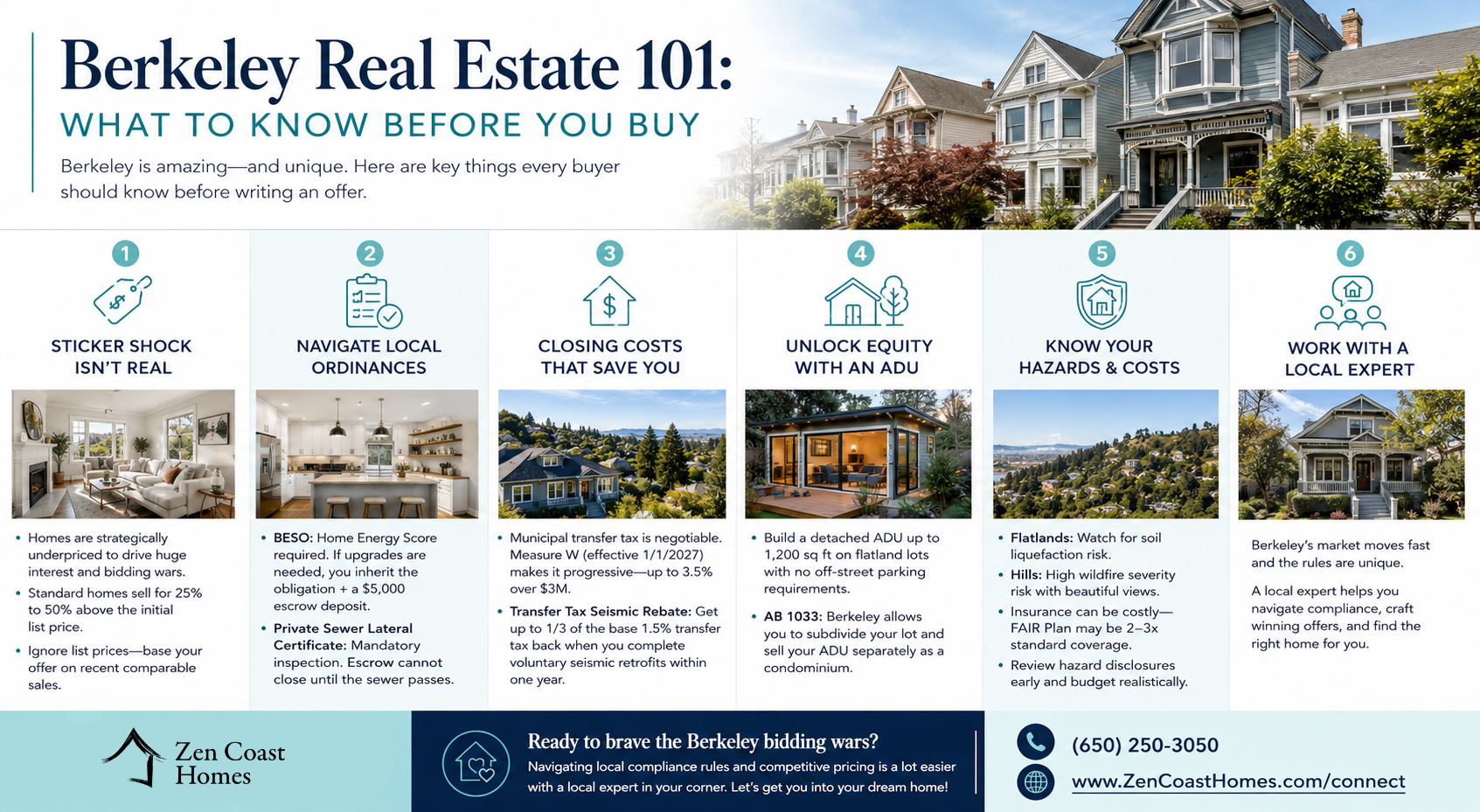
Berkeley is famous for its independent spirit, gourmet food scene, walkable streets, and some of the most gorgeous historic architecture in the Bay Area, from cozy Craftsman bungalows to elegant, shingled Victorians. But if you are planning to buy a home in Berkeley, strap in—it is a fast-moving, highly competitive market. The citywide median home price hovers around $1.5 million, and properties fly into pending status in an average of just 15 days. Before you start scrolling through listings and planning your move, there are a few unique local rules and market quirks you need to know.
First, let's talk about the "sticker shock" that isn't actually what it seems. If you spot a dream house in the Berkeley Hills listed for an unbelievably low price and think, "What's the catch?", you have just run into Berkeley's favorite market game. Local agents are notorious for strategic underpricing. They intentionally list properties far below market value to drive massive interest, pack open houses, and spark intense bidding wars. In fact, standard homes routinely sell for 25% to 50% above the initial list price. When planning your budget, ignore the list prices entirely and base your bidding strategy on what comparable homes have actually sold for recently.
Berkeley is also home to some progressive local ordinances that you must navigate during escrow. For starters, there’s the Building Emissions Saving Ordinance (BESO), which requires single-family homes and duplexes to get a official Home Energy Score assessment before listing. If the home doesn't meet the city's standards, that upgrade obligation (think heat pumps, solar, or induction stoves) gets kicked to you as the buyer, along with a $5,000 deposit structure held in escrow to ensure you complete the upgrades within two years. You'll also need to budget for the unglamorous but mandatory Private Sewer Lateral Certificate of Compliance. Escrow cannot close until a licensed contractor performs a physical test on the sewer line witnessed by a city inspector, and if it fails, repairs have to happen immediately.
Let's look at closing costs and earthquake safety—two things that actually work together to save you money. Berkeley charges a municipal transfer tax when real estate changes hands, which is customarily negotiable between buyers and sellers. On January 1, 2027, Measure W takes effect, transitioning this tax into a progressive tiered structure with rates climbing up to 3.5% for properties selling above $3 million. But here’s the cool part: Berkeley offers a fantastic Transfer Tax Seismic Rebate program. If you complete voluntary seismic retrofits—like foundation bolting or cripple-wall bracing—within one year of your purchase, the city will refund you up to one-third of the base 1.5% transfer tax on a dollar-for-dollar basis. It’s basically the city paying you to make your home earthquake-safe!
If you are looking for a clever way to offset those high Bay Area mortgage payments, look in the backyard. Berkeley is incredibly friendly to Accessory Dwelling Units (ADUs), also known as backyard cottages or in-law units. You can build a detached ADU up to 1,200 square feet on flatland lots with no off-street parking requirements. But the real game-changer is AB 1033. Berkeley is one of the first cities in the state to implement this law, which allows homeowners to subdivide their lot and sell their ADU separately as a standalone condominium. If you build a detached backyard cottage, you can put it on its own title and sell it off to cash out on some serious home equity.
Finally, remember that natural hazard risks in Berkeley change dramatically block-by-block, which has a massive impact on your wallet. Buying in the low-lying flatlands means keeping an eye out for soil liquefaction zones during earthquakes, while buying in the Berkeley Hills means dealing with beautiful views but high wildfire severity risks. Because of this fire risk, finding standard homeowners insurance can be incredibly difficult, often forcing buyers to rely on the state-backed California FAIR Plan, which can cost two to three times more than standard coverage. Make sure you evaluate insurability and read through the seller's natural hazard disclosure packages early in the process so you can budget realistically and find a home that is truly safe and resilient.
Ready to brave the Berkeley bidding wars? Navigating local compliance rules and competitive pricing is a lot easier with a local expert in your corner. Contact us today at (650) 250-3050 or at www.ZenCoastHomes.com/connect for a quick, zero-pressure strategy session and let's get you into your dream home!