
Categories
Bay Area California, Bay Area Real Estate, Real EstatePublished September 28, 2026
Move-Up Buyers: How to Sell and Buy Your Next Home Without the Stress


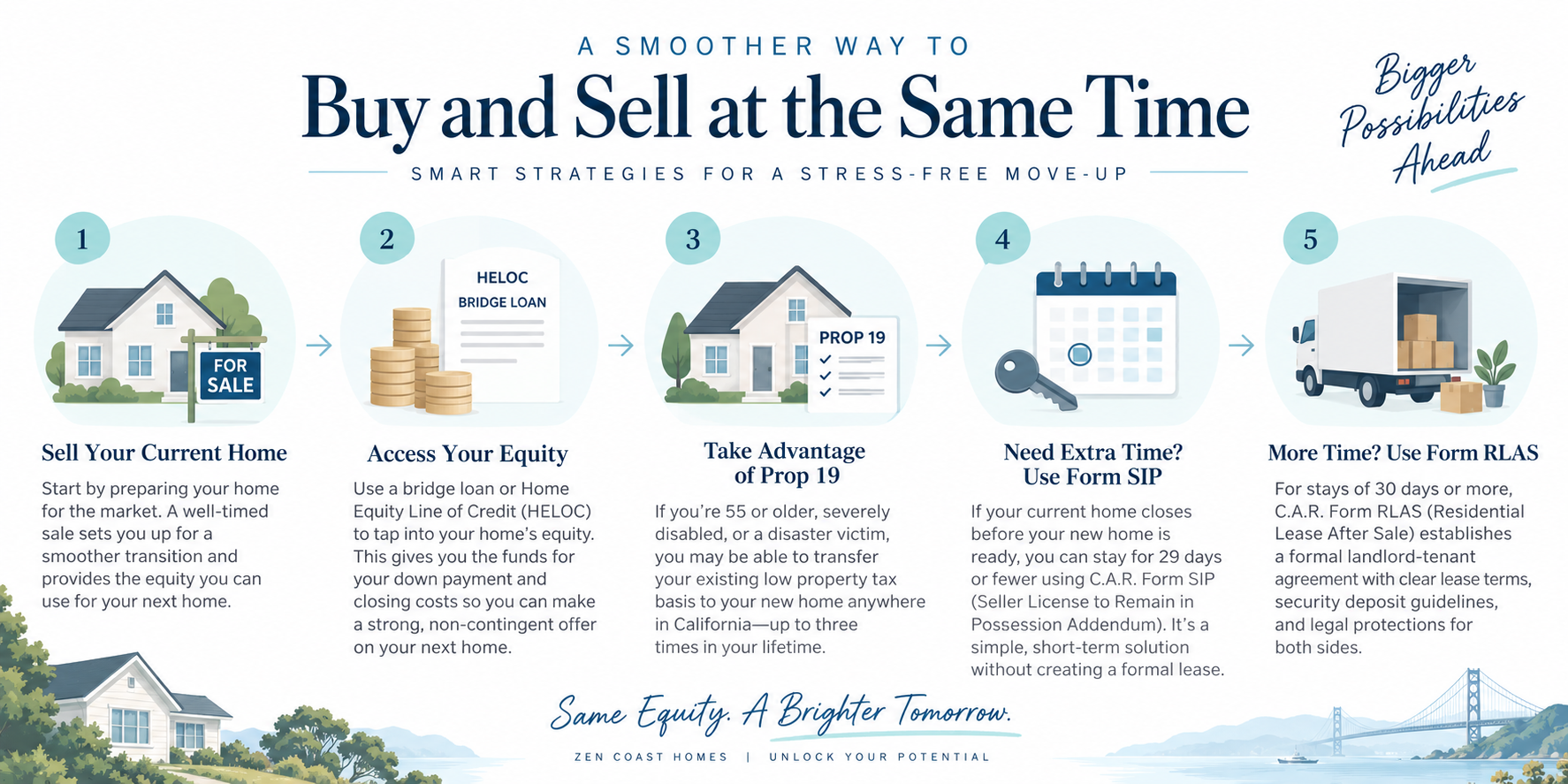
Trading up to a bigger home for your growing family or moving to your dream neighborhood should be an exciting milestone, but trying to buy and sell at the same time can feel like juggling flaming torches. The biggest headache for move-up buyers is the timing gap—where closing dates, moving trucks, and mortgage approvals do not line up. Many buyers worry they will either have to move twice into temporary quarters or submit a home-sale contingent offer that sellers in competitive markets quickly reject. Fortunately, with a few smart transaction tools, you can upgrade homes smoothly without all the chaos.
The first challenge is getting your down payment ready for the new home before your current house officially closes. Submitting a strong, non-contingent offer is often the key to winning your dream house, and you can achieve this by tapping into temporary bridge liquidity. Tools like bridge loans or Home Equity Lines of Credit (HELOCs) allow you to extract the equity built up in your current property so you have liquid cash ready for closing costs and down payments. Once your original home sells, net proceeds satisfy the short-term financing, leaving you with a standard single mortgage on your upgrade.
If you have owned your current home for years, you might also worry that moving into a higher-priced property will trigger a massive tax surge. Under California’s Proposition 19, eligible homeowners aged 55 and older, severely disabled individuals, or disaster victims can transfer their existing low property tax basis to a replacement primary residence anywhere in California. You can take advantage of this tax portability up to three times in your lifetime, provided both transactions close within a two-year window. Even if your replacement home costs more than your old one, Prop 19 uses a blended tax basis calculation so you only pay higher property taxes on the price difference rather than facing a full reassessment.
What if your old home closes before your new home is ready for move-in? Instead of rushing under pressure, you can arrange a short-term post-closing occupancy agreement. For stays of 29 days or fewer, California real estate transactions utilize the California Association of REALTORS® (C.A.R.) Form SIP (Seller License to Remain in Possession Addendum). Because Form SIP grants a personal license rather than creating a formal lease, it avoids complex landlord-tenant regulations, replacing traditional rent and security deposits with a simple daily license fee and a refundable delivery of possession fee.
If you need a bit more buffer time—30 days or longer—to complete your physical move, C.A.R. Form RLAS (Residential Lease After Sale) comes into play. Occupancy of 30 days or more legally establishes a formal landlord-tenant relationship governed by California Civil Code. This form establishes clear lease terms, standard security deposit guidelines under Civil Code § 1950.5, and statutory habitability standards so that both buyer and seller are fully protected throughout the extended stay.
Moving up to your next home doesn't have to mean choosing between constant stress and settling for less. By combining bridge financing, Proposition 19 tax savings, and clear post-closing occupancy addenda, you can synchronize your move, protect your equity, and step into your new chapter with complete confidence. Partnering with a real estate professional who understands these modern transaction strategies makes buying and selling at the same time smooth, seamless, and hassle-free. Reach out to us at www.zencoasthomes.com/connect for a free consultation!

Jennie Lok
Real Estate Agent and Passive Income Coach | Zen Coast Homes | Real Brokerage Technologies
or another way